How to Promote High-Ticket Affiliate Products Without the Hype
Learning how to promote high ticket affiliate products can feel intimidating. The potential commissions may be larger than those offered for inexpensive products, but the buying decision is also more demanding.
Someone may buy a $20 product after seeing a short recommendation. A purchase costing hundreds or thousands of dollars normally requires more research, trust, explanation, and follow-up.
That changes your role as an affiliate. Simply placing an affiliate link in front of as many people as possible is rarely enough. Your job is to help the right people understand the problem, evaluate the available options, and make an informed decision.
This guide explains how to promote high-ticket affiliate products ethically, attract qualified prospects, and measure whether your strategy is actually working.
Why High-Ticket Affiliate Promotion Is Different
High-ticket products can include business education, professional software, premium services, specialized equipment, coaching, and advanced digital programs.
The exact price that qualifies as “high ticket” varies. What matters is that the cost is significant enough to make the customer pause before purchasing.
Prospective buyers will often ask:
- Does this product solve a problem I genuinely have?
- What exactly is included?
- Are there additional costs or upgrades?
- How much time and effort will it require?
- Can I trust the company and the person recommending it?
- What happens if the product is not right for me?
- Are there credible alternatives?
A strong promotional strategy answers these questions instead of trying to distract from them.
High-ticket affiliate marketing therefore requires education before conversion. The higher the financial commitment, the more important it becomes to provide clear information, realistic expectations, and multiple opportunities for the prospect to evaluate the offer.
Start With a Product You Can Promote Honestly
No marketing strategy can compensate for a poor product.
Before promoting an offer, investigate the customer experience rather than focusing only on the commission. Examine the product, training, support, pricing, refund terms, sales process, and any additional expenses a customer may encounter.
Ask the following questions:
- Does the product solve a clearly defined problem?
- Is the pricing transparent?
- Can customers understand what they receive before paying?
- Are the marketing claims realistic and verifiable?
- Is meaningful customer support available?
- Are the refund and cancellation terms easy to find?
- Does the company have a credible track record?
- Would I still consider the product valuable without the affiliate commission?
Large commissions can make an offer attractive to an affiliate, but they do not automatically make it valuable to a customer.
Visible Margin’s guide to choosing high-ticket affiliate products provides a more detailed evaluation checklist.
Define the Right Audience
Trying to promote a high-ticket offer to everyone usually creates broad, unfocused content that connects with nobody.
Start by identifying the people most likely to benefit from the product.
Consider:
- The specific problem they are trying to solve
- What they have already attempted
- Why previous solutions were insufficient
- Their budget and willingness to invest
- The outcome they realistically want
- Their main questions and concerns
- The information they need before deciding
This research helps you create content around real search intent instead of generic promotional language.
It also allows you to disqualify people for whom the offer is unsuitable. That may produce fewer clicks, but the visitors who continue will be more relevant.
High-ticket affiliate marketing is not about generating the largest possible audience. It is about helping an appropriate audience evaluate an appropriate solution.
Build Trust With Educational Content
Useful content can introduce the problem, answer questions, compare possible solutions, and explain what a product can and cannot do.
Effective formats include:
SEO Articles
Create articles around questions prospective customers already search for. Tutorials, cost breakdowns, beginner guides, comparisons, and problem-solving articles can attract visitors with clear intent.
Each article should answer one primary question thoroughly rather than mentioning dozens of loosely related subjects.
Honest Product Reviews
A useful review should cover more than the vendor’s advertised benefits. Include:
- What the product contains
- Who it may suit
- Who should avoid it
- The complete cost where available
- Required tools or additional expenses
- Advantages and limitations
- The expected workload
- Support and refund information
- Relevant alternatives
Disclose your affiliate relationship clearly. Readers should never have to investigate whether you may receive compensation.
Comparison Articles
Comparisons can help people who are already considering several solutions. Use the same criteria for every product and explain where each option performs well or falls short.
Do not create a comparison designed to make one product win regardless of the evidence.
Tutorials and Demonstrations
Show how the product, service, or underlying process works. Screenshots, demonstrations, checklists, and step-by-step explanations can provide information that a standard sales page does not.
Short-Form Video
Short videos can answer one question, challenge one misconception, or introduce one useful idea. Their purpose should be to create relevant curiosity, not to make exaggerated promises.
Interested viewers can then continue to a complete article, review, or presentation.
Email Follow-Up
Email allows you to continue the conversation after someone voluntarily joins your list. A useful sequence might include:
- The promised resource or checklist
- A practical lesson related to the customer’s problem
- Common mistakes or misconceptions
- A transparent explanation of the solution
- Costs, limitations, and suitability
- An invitation to review the complete presentation
Every message should provide value and include an easy way to unsubscribe.
Use a Simple High-Ticket Affiliate Funnel
Sending cold visitors directly to an expensive offer gives them little time to understand the product or trust the recommendation.
A more useful path is:
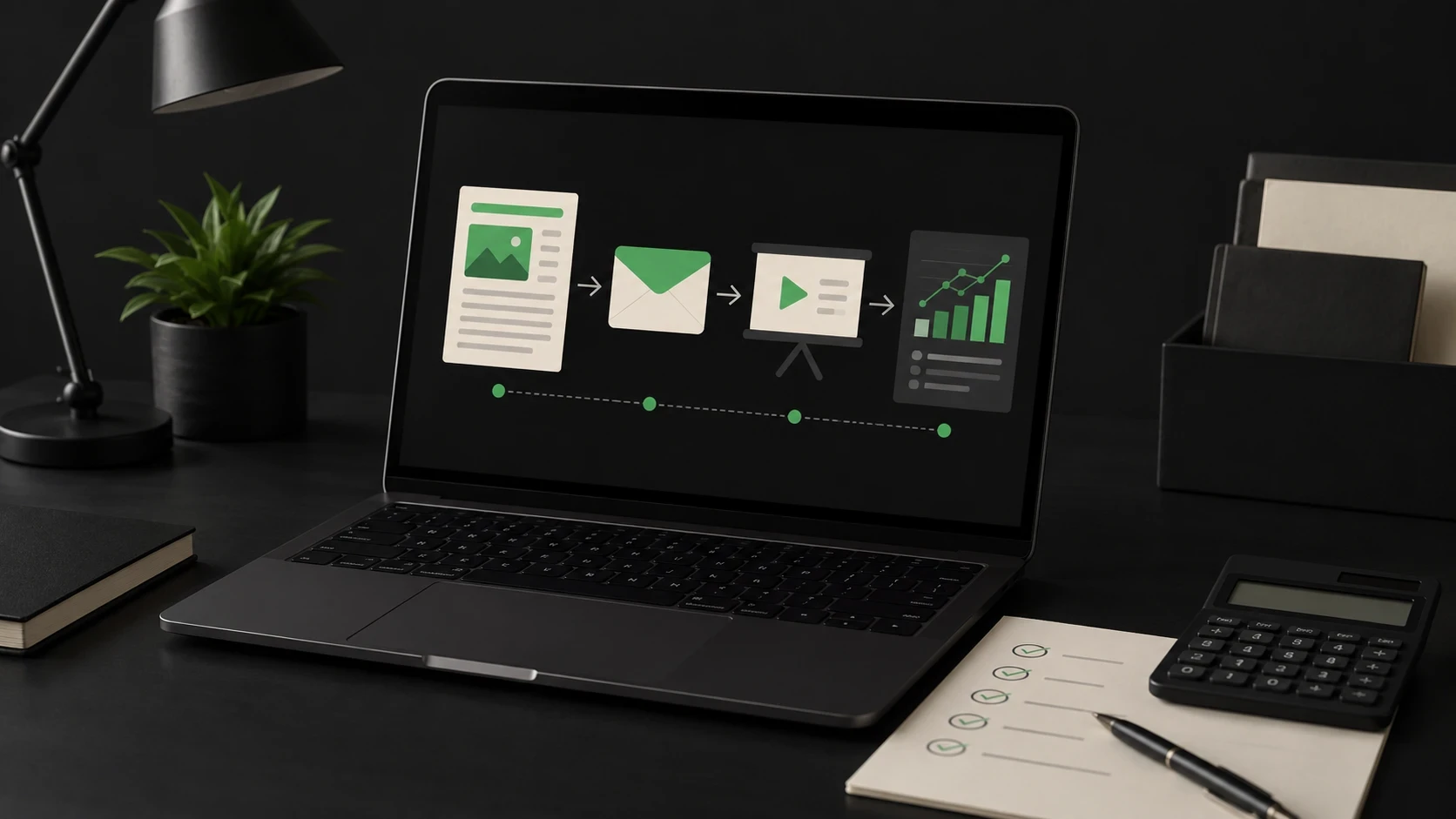
Helpful content → additional information or lead magnet → presentation → follow-up → informed decision
Here is how each stage works.
1. Helpful Content
A search article, video, or social post answers a genuine question and introduces the problem.
2. Lead Magnet or Information Page
Interested visitors receive a relevant checklist, guide, comparison, or other resource. Email collection should be permission-based and clearly explained.
3. Product Presentation
The presentation explains the product, training, price, sales process, responsibilities, and potential limitations in greater depth.
4. Follow-Up
Emails answer common questions and help prospects decide whether the offer fits their circumstances.
5. Decision
The prospect can purchase, request more information, or decide that the product is not appropriate.
A person deciding not to buy is not automatically a failed result. Helping unsuitable prospects identify that fact can protect your reputation and reduce refunds and complaints.
Attract Qualified Prospects, Not Just Attention
Traffic alone does not measure commercial success.
A broad or sensational post may generate thousands of views without attracting anyone who needs the product. A detailed article answering a specific purchasing question may receive less traffic while producing more meaningful actions.
Qualified prospects generally:
- Recognize the problem the product addresses
- Are actively researching possible solutions
- Understand that implementation requires effort
- Have the resources needed to participate
- Want detailed information rather than income promises
- Are willing to compare costs, risks, and alternatives
Use precise titles and keywords that reflect these intentions.
For example, “Make Money Fast With This Secret System” attracts curiosity based on an unrealistic promise. “What Does This Business System Cost, and What Is Included?” attracts readers looking for decision-making information.
The second audience is smaller but substantially more relevant.
Be Transparent About Costs and Limitations
Transparency is especially important when promoting an expensive product.
Explain:
- The initial purchase price
- Recurring fees
- Optional and required upgrades
- External tools or services
- Refund conditions
- Expected time commitment
- Skills the customer may need to develop
- What support is and is not provided
- Your affiliate relationship
- Important risks and limitations
Avoid implying that access to a system automatically produces results. Customers still bring different skills, budgets, available time, experience, and levels of execution.
Clearly stating who should not purchase the product can strengthen credibility. It demonstrates that the recommendation is based on suitability rather than commission alone.
Track the Metrics That Matter
Visible Margin’s approach is to build, measure, and document the numbers.
For a high-ticket campaign, track:
- Visitors to each article or video
- Clicks to the information page
- Opt-in conversion rate
- Cost per lead, if traffic has a financial cost
- Presentation visits and completed views
- Email opens, clicks, replies, and unsubscribes
- Qualified inquiries
- Confirmed sales
- Refunds or cancellations
- Affiliate commissions received
- Software, content, and advertising expenses
- Actual profit after expenses
These numbers reveal where the process is breaking down.
Traffic without clicks may indicate weak relevance or calls to action. Clicks without opt-ins may point to a poor transition or lead magnet. Presentation views without conversions may signal a mismatch between the audience, product, price, or expectations.
Avoid judging the entire strategy by likes, views, or follower counts alone.
Validate Organically Before Buying Traffic
Paid advertising can increase traffic, but it can also multiply an untested funnel’s problems.
Before investing heavily in advertising, look for evidence that:
- Your content attracts the intended audience
- Visitors click for more information
- The opt-in page converts relevant visitors
- Subscribers engage with the follow-up
- Prospects watch or review the presentation
- The offer produces genuine interest
- Tracking works from the first visit through the final outcome
Organic traffic is not completely free—creating content takes time and may require tools—but it can provide useful early feedback without a large advertising budget.
Paid traffic should be treated as a measured experiment, not as a shortcut around weak positioning.
Common High-Ticket Affiliate Marketing Mistakes
Avoid these frequent mistakes:
- Choosing an offer primarily because of its commission
- Repeating vendor claims without verifying them
- Presenting possible results as typical or guaranteed
- Hiding important costs or upgrades
- Posting affiliate links in unrelated groups and comments
- Targeting everyone instead of a defined audience
- Sending cold visitors directly to an expensive offer
- Collecting email addresses without clear consent
- Following up with promotions but no useful information
- Buying traffic before testing the funnel
- Using fake scarcity, testimonials, or earnings screenshots
- Measuring attention without tracking leads, sales, and expenses
High-pressure tactics may occasionally create a transaction, but they are a weak foundation for a trustworthy, sustainable business.
A Practical Beginner Action Plan
Use this sequence to begin:
- Select one credible high-ticket product in a clearly defined niche.
- Evaluate its quality, price, terms, support, limitations, and customer experience.
- Define the customer most likely to benefit from it.
- List that customer’s main questions and objections.
- Create one comprehensive SEO article answering an important question.
- Publish an honest product review or cost breakdown.
- Create a relevant checklist or guide for interested readers.
- Connect the content to an information page or presentation.
- Build a short, permission-based email sequence.
- Track traffic, clicks, opt-ins, presentation views, expenses, and conversions.
- Improve the weakest part of the process using the collected evidence.
- Consider paid traffic only after the organic process shows meaningful engagement.
One focused offer and a measurable process will teach you more than promoting multiple unrelated products without reliable tracking.
Exitus Elite as a Real-World Example
Exitus Elite is a high-ticket business education and direct-sales system. Its structure makes it a relevant example because prospective customers need to understand more than the headline offer.
They should examine:
- What training and products are included
- The available purchase levels
- How the compensation structure works
- What the member must do
- How prospects enter the sales process
- The role of the optional sales team
- Additional fees and expenses
- The risks and limitations
The Visible Margin Exitus Elite review examines the program’s costs, structure, potential advantages, and risks.
Exitus Elite also offers an optional sales team that can handle parts of the sales conversation after a prospect enters the appropriate process. This does not remove the affiliate’s responsibility to generate interest, communicate honestly, and attract suitable prospects. The Exitus Elite sales-team guide explains the arrangement in more detail.
Exitus Elite is not an automatic income source, a guarantee of profit, or necessarily the right option for every reader. It should be evaluated using the same standards as any other high-ticket opportunity.
Frequently Asked Questions
How Do You Start High-Ticket Affiliate Marketing?
Choose a credible niche and one product that solves a genuine problem. Define the target audience, create helpful content around its questions, and connect that content to a simple presentation and permission-based email sequence. Track traffic, leads, expenses, and confirmed sales, then improve the process using evidence rather than hype.
Beginners should focus on learning one measurable process before adding more products, traffic sources, or expensive tools.
What Are the Best High-Ticket Items for Affiliate Marketing?
There is no universally best high-ticket item. Potential categories include reputable business education, professional software, premium services, specialized equipment, coaching, and carefully evaluated digital programs. The best choice depends on the audience, product quality, transparent pricing, support, refund terms, commission conditions, and genuine customer value.
A smaller commission from a strong audience-product match may be more sustainable than a larger commission from an unsuitable offer.
How Do You Sell High-Ticket Items?
Affiliates normally refer or promote high-ticket products rather than controlling the complete sale. Effective promotion uses educational content, demonstrations, transparent reviews, qualification, presentations, objection handling, and consistent follow-up. The goal is to give prospective buyers enough reliable information to make an informed decision without pressure.
Trust and relevance matter more than repeatedly posting an affiliate link.
What Is the Best Product to Promote in Affiliate Marketing?
The best affiliate product is one that fits your audience’s needs, delivers genuine value, provides credible support, and has terms you can explain honestly. It should also have a reliable sales process and fair compensation. Commission size alone should never determine which product you promote.
Choose a product you can discuss accurately, including its disadvantages and the situations where it may not be suitable.
Can You Promote High-Ticket Products Without a Large Following?
Yes. A large following is not required if your content reaches a smaller but relevant audience. SEO articles, focused videos, email follow-up, and useful comparisons can attract people already researching the problem. Qualified traffic is generally more valuable than a large number of uninterested visitors.
How Long Does High-Ticket Affiliate Marketing Take?
There is no reliable universal timeline. Results depend on the product, audience, traffic, content quality, competition, follow-up, budget, and execution. Building search traffic and trust may take months, and some campaigns never become profitable. Track leading indicators such as relevant traffic, opt-ins, presentation views, and replies while monitoring actual expenses.
Review the Complete Process
If you want to examine one high-ticket system in more detail, you can review the Exitus Elite presentation through Valiro (Affiliate link: I may receive compensation if you purchase through this referral.).
The presentation explains how the system, training, sales process, and member responsibilities work. Review the available information, costs, terms, and risks carefully before deciding whether it fits your circumstances.
There is no obligation to join, and no business opportunity can guarantee income or profit.
Affiliate disclosure: Visible Margin may receive compensation if you purchase through certain links on this page, at no additional cost to you. This does not change how the program is evaluated.